Apple calls them Voice Memos.
Temporary.
Disposable.
Forgettable.
We call them your audio autobiography.
Every recording—from your kid’s first laugh to that perfect thunderstorm—is a piece of your story. And stories shouldn’t be lost in timestamp hell.
The Origin Story
I’m a musician. My phone had 1,847 voice memos. Song ideas, rehearsal recordings, weird sounds that inspired me. Finding anything was impossible. “New Recording 1,233” could be a Grammy-worthy hook or my grocery list.
I tried everything:
- Naming them properly (lasted 3 days)
- Organizing in folders (which folder for a recording with guitar AND vocals?)
- Exporting to computer (then never accessing them)
- Third-party apps (same problems, now with subscriptions)
The revelation: The problem wasn’t me. It was the fundamental assumption that voice memos are temporary notes, not permanent memories.
The Paradigm Shift
Old Thinking: Voice memos are quick notes to be transcribed and deleted.
Our Reality: Voice memos are:
- Your kid’s evolving vocabulary
- Song ideas that become albums
- Lectures that shape careers
- Last conversations with loved ones
- Ambient sounds from places you’ll never visit again
- Your dog learning tricks
- Your cat making weird meow sounds
- Evidence of car problems
- Proof of important conversations
They’re not temporary. They’re your life’s soundtrack.
Why Another Voice Memo App?
Because nobody built the right one. They built:
- Transcription apps (assumes everything is speech)
- Music recording apps (too complex for quick capture)
- Note apps with voice features (voice as an afterthought)
- Cloud storage with recording (privacy nightmare)
Nobody built an app that understands that sound itself is the content.
The Core Beliefs
1. Sound is the primary data, not text
Your baby’s laugh doesn’t need transcription. That songbird doesn’t need words. The sound IS the message.
2. Organization should be automatic
You’ll never manually organize 1,000 recordings. AI should do it for you, immediately, without asking.
3. Multiple truths can coexist
A recording can be “guitar,” “December 2023,” “at home,” and “Project Album” simultaneously. Apps should reflect this reality.
4. Privacy is non-negotiable
Your audio memories shouldn’t train someone’s AI or live on someone’s server. Device-only processing is the only ethical choice.
5. Free should mean free
If the app isn’t useful without payment, it’s not really free. Core features shouldn’t be hostage to subscriptions.
The Technical Philosophy
Offline-First: Because your memories shouldn’t depend on internet connection.
AI-Powered: Because manual organization is a lie we tell ourselves.
Multi-Dimensional: Because recordings exist in multiple contexts.
Import-Everything: Because your audio past matters.
Storage-Efficient: Because audio is tiny compared to video.
Privacy-Absolute: Because trust, once broken, never returns.
The Feature Decisions
Why 600+ sound categories?
Because “Meeting” and “Music” aren’t enough. Guitar is different from piano. Dog barks are different from cat meows. Specificity enables findability.
Why albums instead of folders?
Because folders are a single hierarchy. Albums are a multi-dimensional graph. Your brain doesn’t think in folders.
Why Share Extension everywhere?
Because your audio is scattered across 20 apps. Liberation should be one tap away.
Why custom albums need limits?
Because sustainable businesses serve users better than VC-funded grow-at-all-costs nightmares.
Why no cloud sync, for now?
Because sync creates more problems than it solves for personal audio. We will bring cloud sync but we will do it the right way.
The Use Cases We Built For
The Parent: Every word, laugh, and song from their child’s growth, automatically organized by date and type.
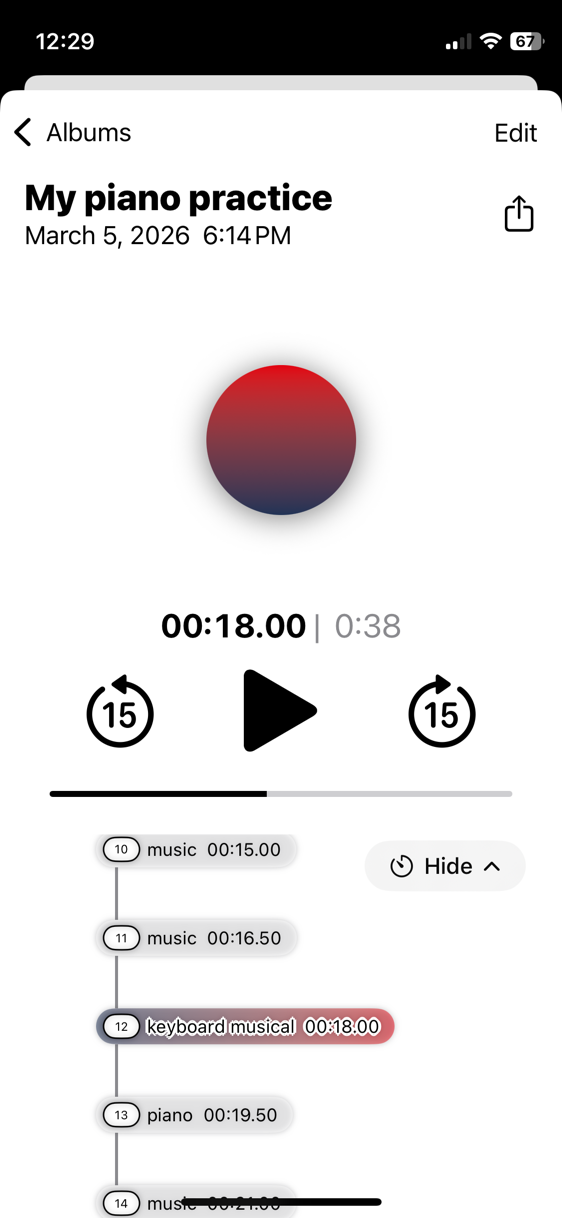
The Musician: Every practice, idea, and rehearsal, automatically sorted by instrument.
The Student: Every lecture, study group, and note, searchable and organized.
The Professional: Every meeting, call, and voice note, private and accessible.
The Collector: Field recordings, ambient sounds, and audio memories, catalogued automatically.
The Creator: Podcast prep, video voiceovers, and content ideas, always findable.
What Success Looks Like
Success isn’t 100 million downloads. Success is:
- Someone finding their dad’s voice years after he’s gone
- A musician discovering the riff that becomes their hit song
- A parent creating an album of their kid’s evolving voice
- A student finding that crucial lecture from sophomore year
- Someone actually enjoying organizing their audio
Success is turning chaos into clarity without effort.
The Promise
We promise to:
- Never upload your audio without explicit permission
- Process everything on your device
- Import everything you’ve ever recorded
- Make finding recordings effortless
- Respect your privacy absolutely
- Build for humans, not engagement metrics
The Invitation
This isn’t just an app launch. It’s a philosophy shift. Your audio memories matter. They deserve better than “New Recording 47.” They deserve automatic organization, intelligent categorization, and respectful privacy.
Join us in building a world where:
- Every sound has its place
- Every recording is findable
- Every memory is preserved
- Every voice matters
Your Audio Future
Imagine opening Sound Library five years from now. Thousands of recordings, perfectly organized. Your kid’s voice evolution from babble to conversation. Every song idea that mattered. That thunderstorm from your best vacation. Your grandparent’s stories.
All findable in seconds. All private. All yours.
That’s not a voice memo app.
That’s your audio autobiography.
That’s Sound Library.